Issue 3: Plot
A quarterly conversation about process and craft with authors Anna-Marie McLemore, Emily X.R. Pan, Anica Mrose Rissi, Sara Ryan, and Nova Ren Suma.
Welcome back to The Eavesdrop, with Anna-Marie McLemore, Emily X.R. Pan, Anica Mrose Rissi, Sara Ryan, and Nova Ren Suma. In this issue, we’re discussing Plot—from the ways we define, conceptualize, and approach it to the strategies that save us when we’re stuck.
Come add a stick to the fire. We’re glad you’re here.
And don’t miss this season’s extras—including a giveaway for subscribers—at the end.
Nova: When we were choosing a topic for this season’s newsletter, one craft topic that feels so sticky and uncomfortable for me came up as a possibility: PLOT. So here’s where I’ll admit it in front of all our subscribers: I’m a plot-adverse writer.
Everything else comes much more easily. I have to force myself to think about plot in a more conscious way and do the work of plotting on the page when I’d much rather spend seventeen paragraphs describing literally anything else. Plot, in amorphous terms and early moments in a draft, confounds me. Plot has hurt me in the past and forced me into numerous rewrites I could have saved myself from much sooner. I'm trying to change my process this spring and wonder if maybe part of my trouble is that I’m at war with plot from the beginning and haven’t found a friendly way to think about it. So let’s begin here…
What even is plot? How do you think about it for yourself?
A-M: Even in early drafts, plot for me is interlaced with the concept of editing, what you’re putting on the page and what you’re leaving out. Because if you know and care about your characters as deeply as writers tend to know and care about them, you probably won’t/can’t show us their entire lives or even their entire lives within the timespan of the story. There will be things your readers never know about (though there’s often value in you as the writer knowing, because that enriches the depth of the story). There will be things that simply aren’t relevant to the story. So for me it often starts with: what constellations of events, of moments, of experiences, shows us this journey and this transformation? What brings us in so that we take that journey alongside the character(s)?
Sara: That idea of plot as being interlaced with other elements really resonates for me, A-M. I find it kind of impossible to consider plot in isolation; it’s never just “this thing happens and then this other thing happens,” it’s “this thing happens to this particular character in this specific setting, and these consequences ripple out.” And especially in early drafts, it’s hard for me to tell what is and isn’t relevant to the story, because as I write I’m getting to know and care about the characters and their setting. It’s only after I understand who & where they are, how they’re connected, and what brings them into and out of conflict that I can focus my metaphorical telescope on the right constellation of events.
Emily: I love your use of the word ripple, Sara! To me that’s exactly what plot is. The ripple effects. I also think of it in terms of human behavior…a certain set of rules that I am supposed to follow based on who my character is and how they think and react. If the story stops making sense, it’s usually because some emotional logic is broken, like having my character make a decision that actually makes no sense for who they are. When I’m setting out to write I try to think of the big peaks in my novel that I’m aiming to hit—for me, plot is the stuff that guides my characters up to those peaks.
Anica: The word “transformation” stands out to me in A-M’s response, because, academically, I think of plot in terms of what changes for a character over the course of a novel, both externally (changes in their world and circumstances; i.e. what happens) and internally (shifts in their understanding of the world and themselves; i.e. what the characters think and feel: why the story matters). And yes, these things are connected. A character’s internal and external plotlines move and interact with, intersect, and shape one other as the story progresses. But when I’m writing, I don’t explicitly think about plot in that way. I approach plot by focusing on tensions.
Sara: Say more about focusing on the tensions? Like, how do you identify & build the kinds of tensions that move the story forward? I’m especially curious because sometimes I have to move through a stage of being too protective of my characters before I can hone in on the tensions.
Anica: Sure. Tensions don’t have to come from being hard on our characters—though “stop protecting your characters from making mistakes and really going through this” is something I’ve said to multiple authors I’ve worked with, so you’re not the only one with that instinct. But tensions do often stem from a character’s (or characters’) deepest desires (which they may be actively aware of or not, depending on the book) and the external factors pulling those desires into immediate relevance, usually in the form of a conflict or the break in an established pattern. And, importantly, they come from the expectations the author sets in the mind of the reader, and the ways those expectations are met or subverted throughout the story. There are no tensions without reader investment.
To find those tensions and the movement within the plot, I ask myself, scene by scene: What do the characters want, wonder, notice, hope, anticipate, feel, or fear? How has this changed or evolved from what they wanted, wondered, noticed, hoped, anticipated, felt, or feared in previous scenes? (Have I given proper time and attention to earning those changes and making them feel believable and real?) And, related, but not always aligned: What does the reader want, wonder, notice, hope, anticipate, feel, or fear? How has this shifted or evolved from what they anticipated, wondered, or were rooting for in previous beats or scenes?
Nova: I’m so heartened by all this talk of character! Now I won’t run away from this newsletter. Focusing on my characters’ desires is how I trick myself into plotting without all the kicking and screaming. I’ve held on to the mantra “Plot Is Character and Character Is Plot,” and I didn’t even know who said it originally—apparently it was F. Scott Fitzgerald. All I know is that so much of my writing process, especially during a first draft, involves side-writing and character prompts, which is surely why so much of my teaching ends up being so character-focused. What my protagonists want and the choices they make that stem from those desires lead me to find the action on the page. It can feel like walking backwards into a dark room—I’m going to the same place eventually (my books do have plots, and I do work consciously with a three-act structure), but I let myself stumble around for a while first. I trust I’ll find the way.
A-M: This makes so much sense to me, how inherently linked character and plot are. If a story gives a great sense of character but that sense doesn’t have a clear connection to plot, we may have a character we want to cheer on, but we’re not sure what to cheer for. If there’s a clear plot but not a strong resonance with character, we won’t have that reader sense of where to place our emotional investment and why. I think you can start with either leading the way. I’ve seen writers lead with plot, developing stories by knowing what happens and then uncovering why, and why it matters. I’ve also seen writers know a character so well that the plot emerges from that knowing. To build off your metaphor, Nova, you’re carrying a small light into that dark room. Wherever that small light comes from, whatever corner of your story you have the best sense of, it can lead you forward. It can be the start of finding your way in a story.
Emily: I’ve tried purely leading with what happens and then figuring out the why, and I’ve also tried starting by only intimately knowing a character and following where they lead—focusing too much on one or the other seems to throw me off balance. I am much more at risk of losing the emotional logic if I’m too heavy on movement at first. However, if I lean too much into using character to guide plot, it can feel too distant from my peaks. I guess even the fact that I have peaks of storytelling guiding me at all are evidence that I work best with a healthy mix. Some of my work is puzzling out what makes sense for moving the characters forward, and some of my work is listening to where they want to go. I can’t seem to do just one, or too much of one. In fact, in my current project, I suspect I’ve currently leaned too far into the what happens before figuring out the why and now I’m stuck in a corner. Has this ever happened to you? How do you get unstuck?
Sara: Hmm. I’m realizing that I feel almost superstitious about contemplating being stuck in a corner, like just thinking about it is somehow a kind of mental quicksand that will make me immediately get stuck myself?! But I think sometimes when I’m stuck, it’s because I’m feeling overwhelmed—too many possibilities, too much to figure out—and getting past the stuckness means I have to find a way to streamline & distill. Maybe I have to consolidate a few different characters into one. Maybe I need to condense the timeline so that things happen more quickly or even simultaneously. Or maybe I need to reconnect with the reasons I got excited about the idea in the first place. What do the rest of you do?
Nova: When I lose the plot, all the desperate measures help: angsty journaling, crying, and silently screaming into my hands. More practically, I’ve used the Save the Cat! beat sheet as a loose framework—not following it exactly because I hate formulas, but helping me with signposts and forcing me to answer active questions. But sometimes the simplest solution works: Time away from the manuscript allows my imagination to move through the problems and when I return it’s somehow clearer.
Anica: Time really is the magic ingredient. Time to wander and think—and time to focus on something else—are both key to jostling things loose enough for me to find my way through.
A-M: What me unsticking my plot usually looks like:
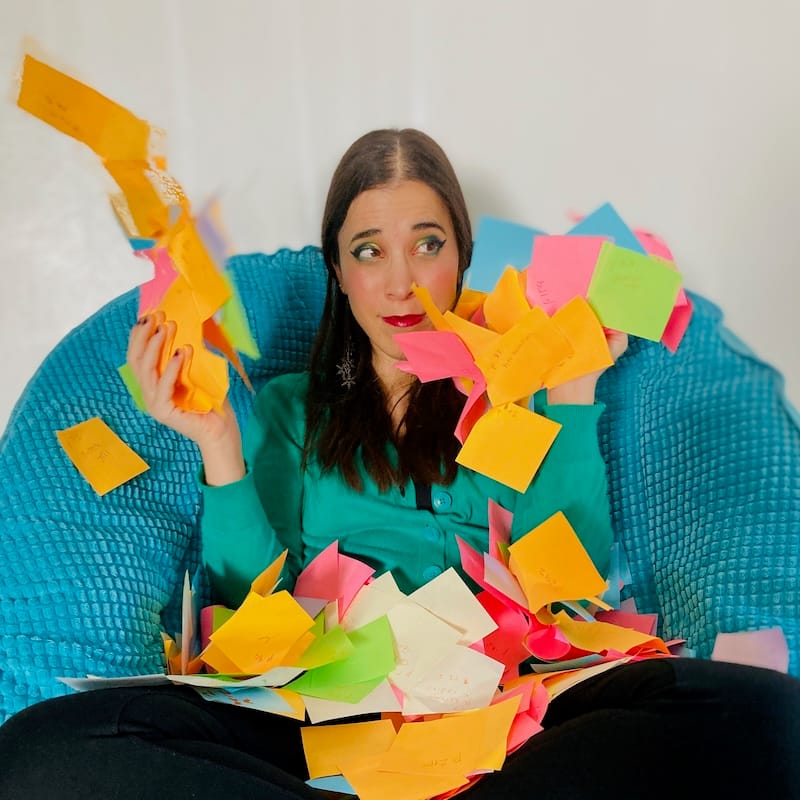
Sometimes it’s sticky notes. Sometimes it’s index cards. Sometimes it’s a notebook. But something about the act of handling the pieces on paper helps me notice possibilities I might not otherwise.
Sneak Up On Your Story: Side Writing
Sara: As we’ve been seeing through this conversation, plot is an element of craft that really doesn’t exist in isolation from other elements of the story. Even if you have a high-concept plot—let’s say a heist—you still need to know who all is on your heist crew and their individual skills and flaws, what they’re going after, why it’s significant to them, where the heist is going to take place, and the opposing forces that will make the heist so difficult to pull off.
Often, “side writing” can be a way into figuring out more about your plot, and I like to think of it as a sideways approach,like you’re sneaking up on your story. Side writing encompasses basically anything and everything you write that might not show up in the final manuscript, but that helps you illuminate character, setting, and, yes, plot.
So for this prompt, consider what side writing might help you discover more about the story you’re telling. Do you need to know more about a character’s backstory? Do you need to draw out a floor plan or map of an important place in the story? Do you need to make a timeline of how the events in your story intersect with local/national/world/intergalactic events?
If you’re struggling to come up with what kind of side writing to do, I’ll offer this specific prompt: write from the point of view of a significant setting in your story. “If these walls could talk—” well, it turns out they can! And they can tell you about their history, hopes, and fears.
Anica: I recently read Elizabeth McCracken’s A Long Game: Notes on Writing Fiction, which is a collection of insights, anecdotes, admonishments, and advice about craft, process, and the writing life. It’s delightful, and McCracken is clearly an excellent teacher. Here’s one wise thing she says about plot:
“Event is what happens in a story, but plot is the electricity between events, how events lead one to the next, working the way through the characters. It’s the difference between character and character development, between a line of dialogue and a conversation. Event is a particle of plot.”
Right now Nova is listening to: the same song, over and over.
Nova: Songs have a way of getting locked onto a specific novel I was writing, so much so that sometimes I can’t listen to a particular song after a book is done. (Lykke Li’s “Hanging High” had to be archived off my writing playlist since my novel Imaginary Girls came out 15 years ago.) I transport myself with songs and tend to listen on a loop, for hours on end. (I could listen to Lucy Dacus’s “Night Shift” or Bright Eyes’ “Poison Oak” a thousand times in a row and never tire of where my imagination takes me.) The chosen song doesn’t need to have a direct correlation to my story, but an emotional cord is there. Or a lyric hints to me of something. I’m drawn to songs that haunt me, songs that take me out of my body and let me imagine being someone else.
Lately, I’ve been haunted by a particular song on Mitski’s new album, Nothing’s About to Happen to Me. I was intrigued when I read how she created a fictional character for this album about “a reclusive woman in an unkempt house. Outside of her home, she is a deviant; inside of her home, she is free.” And the song of the moment for me is “If I Leave.” There’s something about the lines “Only you know, I’ve let only you know / How I ride through a tunnel / And it’s dark the whole way” and how that isolating refrain builds and builds that connects to this strange little novel I’m currently writing and the characters inside it.
Each quarter Emily offers a Tarot reading to capture the energy we might carry with us through the season and into the next stage of our projects.
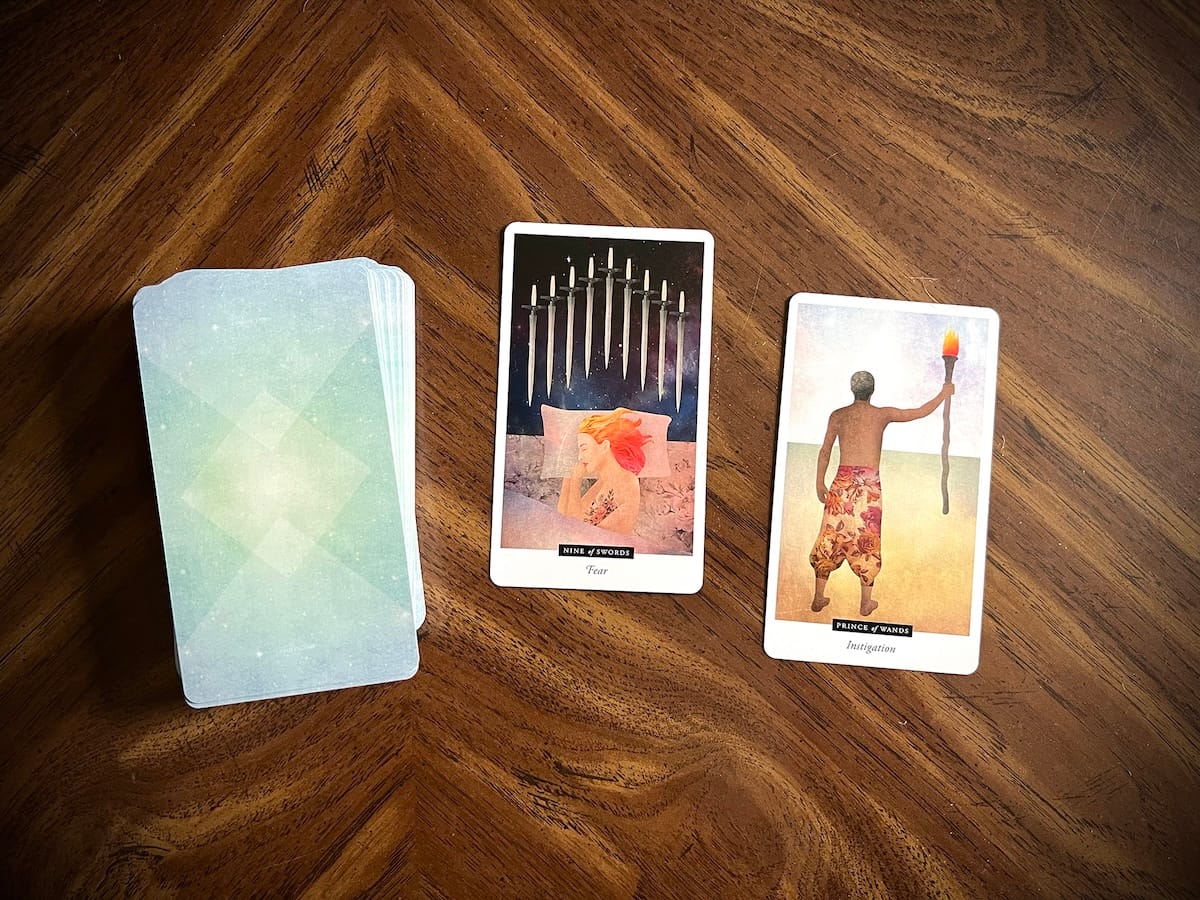
This season’s card pull comes from The Field Tarot, and I impulsively decided to draw two cards this time: one for state of mind and one for action.
For state of mind I drew the Nine of Swords, with the key word Fear written at the bottom, which personally feels very apt right now. In this variant nine swords are suspended against the night sky, pointing down toward a fiery-haired, pale-skinned sleeper who looks tense and tight in their features and position. This card doesn’t typically refer to bad things happening, but is representative of intense stress and anxiety—and yes, fear. Fear of failure and disappointment, in my case.
When I draw a card like this and find the Tarot mirroring back so accurately how I’ve been feeling, I pause to journal about just what it is that’s weighing me down. And then I force myself to continue the journaling prompt into the positive: What is it that I’m enjoying about my project or process? I’ll encourage you to try the same.
For action I drew the Prince of Wands (traditionally the Ace of Wands), with the key word Instigation written at the bottom. I always see this as an overwhelmingly positive card, full of forward momentum and new energy, so it was really nice to draw this after the Nine of Swords. In this particular depiction a masculine figure with brown skin and floral pants stands facing away from us but towards the distant sky, raising a torch to the stars. It’s a card that urges you to accept a challenge, to maybe start something new or find a new angle, and trust that you can do it.
If you have a book-of-your-heart that you’ve been scared to try writing, maybe now is the time. If you’re feeling stalled in a current project, how can you reinvent it?
I have been debating starting yet another from-scratch rewrite of my book. Maybe this is my sign.
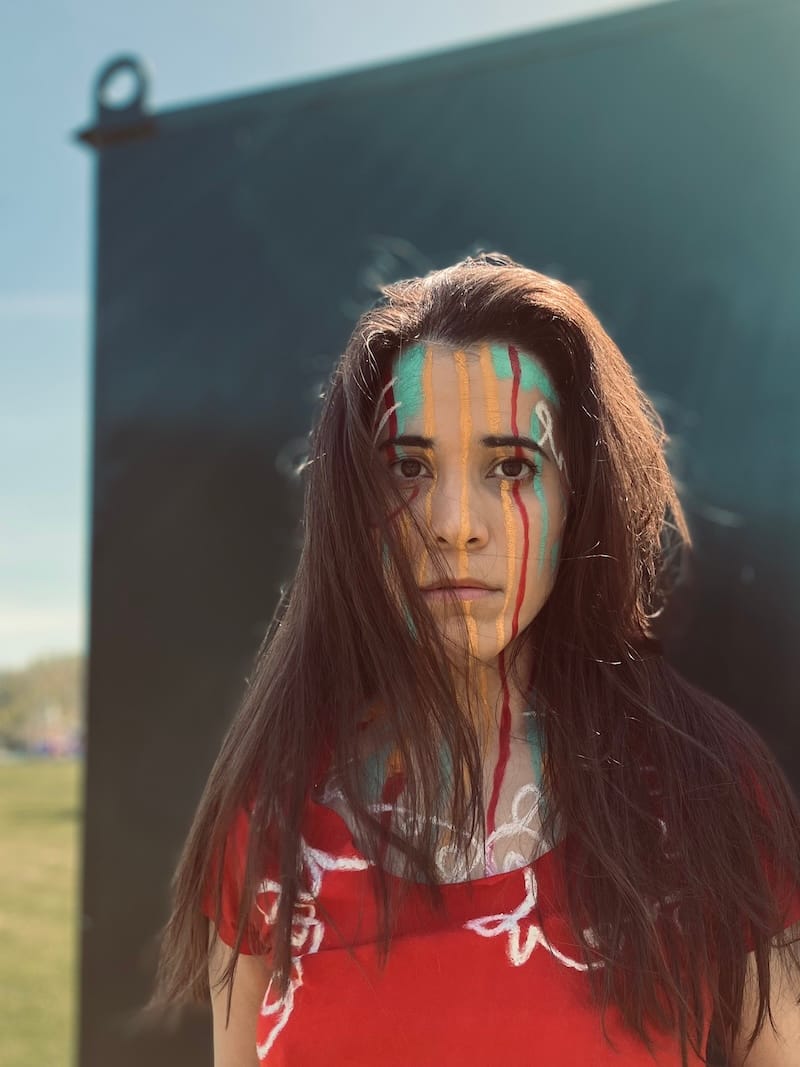
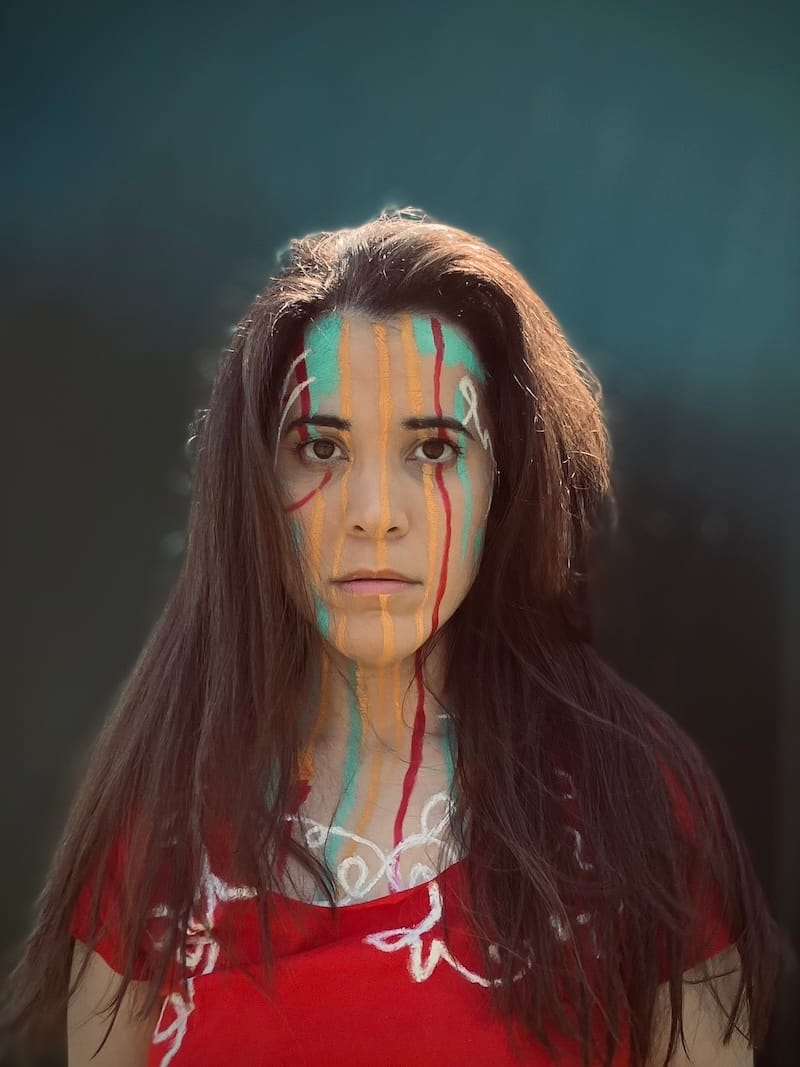
Bienvenidos a Cosplay Corner, where A-M dresses up as a book character or book cover!
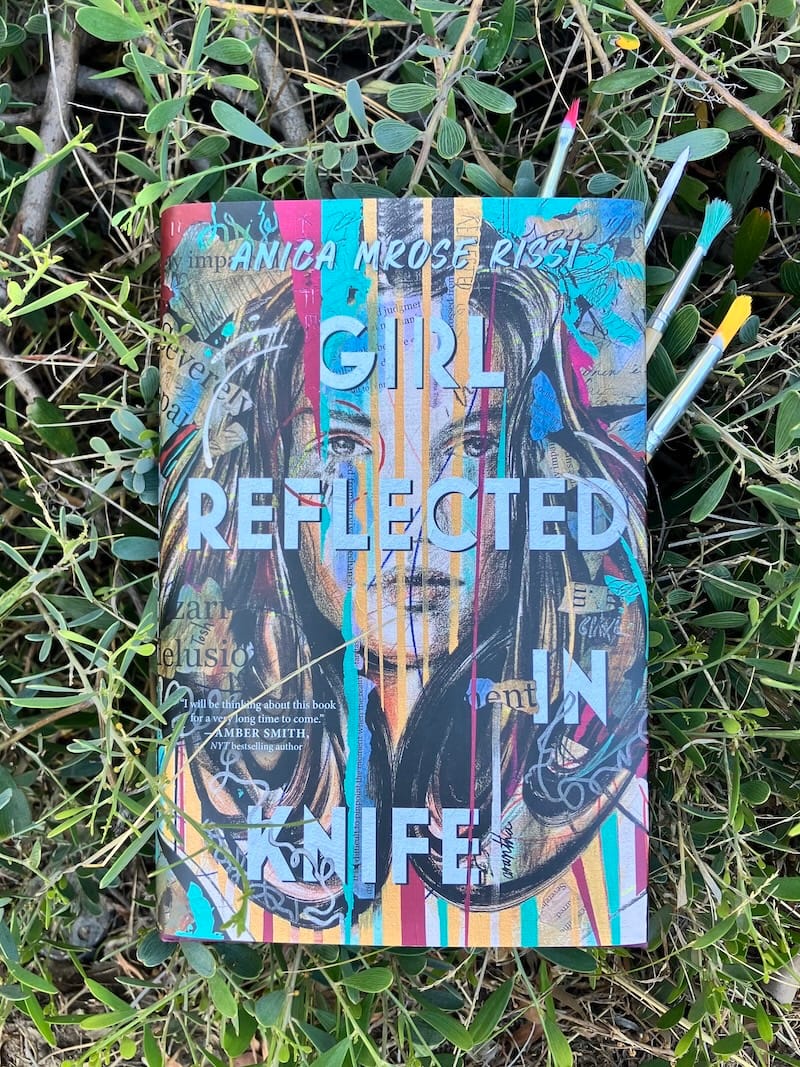
Our very own Anica Mrose Rissi’s critically acclaimed Girl Reflected in Knife will be released next month, so this issue’s Cosplay Corner is in honor of this stunning novel.
Here’s a story for you:
Once there was a girl named Destiny, who should have known better and did.
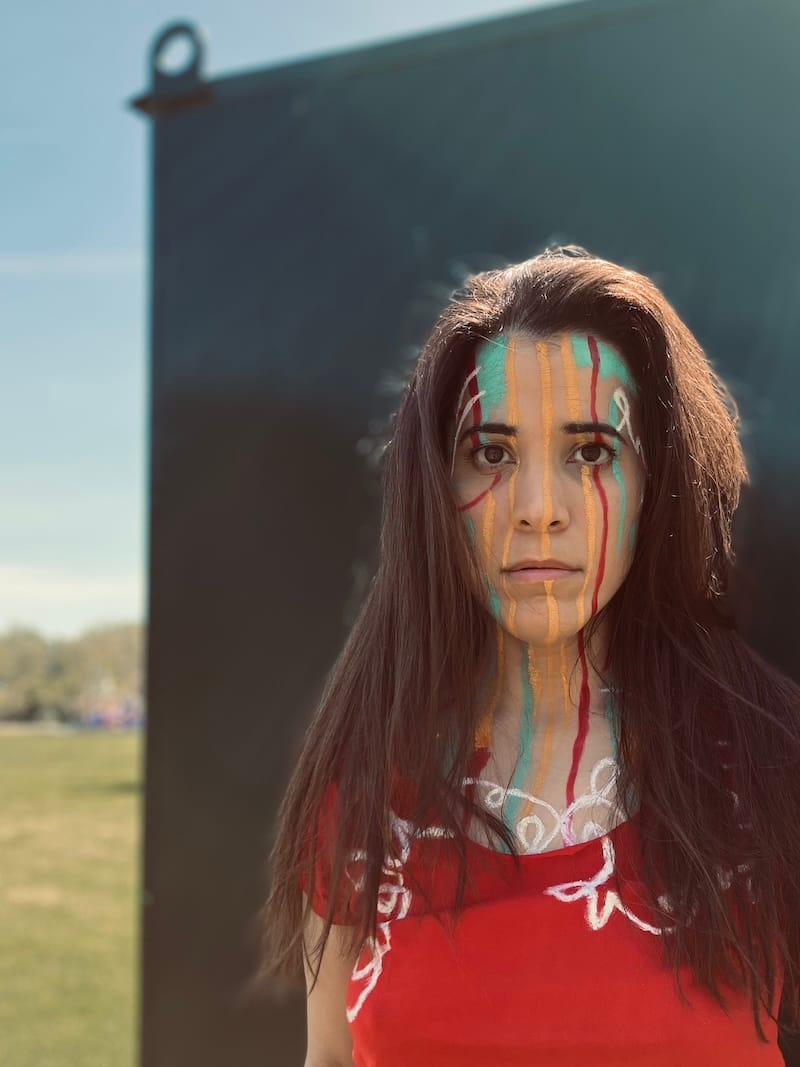
Artistic expression is a thread that runs deep through Girl Reflected in Knife, so it was only fitting to break out the paint and brushes and take inspiration from the book’s gorgeous cover. I duplicated some elements from the cover girl’s face and added my own interpretation of some of the elements from along the edges of the cover.
The girl’s name contained a promise—an expectation and prediction
of some larger fate, or perhaps of a path she must follow.
But how does a destiny differ from a curse?
Yet here’s the thing about a tale as old as time:
Each time you tell it, it changes.
And after the never after, the twice upon a time begins.
Sara will be in conversation with Will Alexander about his adult sf debut, Sunward, at Parallel Worlds on April 1, and with Shana Targosz about her new book, The Underwild: Relic of Thieves, at the Clackamas Barnes & Noble on April 4.
Anica's latest novel, Girl Reflected in Knife, “a breathless, mesmerizing tale that’s…emotionally immediate yet ethereal and darkly fantastical” (Kirkus, starred review) comes out in hardcover, audio, and ebook on April 7. If you enjoy “propulsive” (PW) novels “with lush, harrowing language” (Booklist), please preorder a copy or request it at your library!
Anica and Emily will discuss Girl Reflected in Knife (and eat cupcakes and sign books) at the Princeton Public Library launch event in Princeton, New Jersey, on April 7 at 6:30pm. Free and open to the public.
Sara's latest novel, Mountain Upside Down, is out in paperback and nominated for an Oregon Book Award; the ceremony is April 20.
Nova is teaching an online craft intensive with McCormack Writing Center (formerly Tin House) later this spring. Strange Places is a three-hour generative writing class that will delve into crafting fantastical, haunted, hallucinatory, or just simply strange settings that stem from the world around us and the world of untapped ideas inside your own mind. Register now to write with Nova on May 17.
“McLemore’s latest novel for young adults may be their best” (SLJ, starred review).
“…lush prose and deft character writing intertwine for a spectacular offering” (PW, starred review).
“…celebrating the power of queer joy and community” (Booklist, starred review).
A-M's We Could Be Anyone comes out on May 26, 2026, so if your Pride Month could do with a bit of gay Golden Age Hollywood sparkle, preorder or request from your local library. And if you’re in the New York/New Jersey area toward the end of May, come say hi (event details below).
A-M and Anica will be in conversation about craft at a Writers on Writing event at Labyrinth Books in Princeton, New Jersey, on May 28 at 6pm. You can also find them both at the Sullivan County Youth Book Festival in Monticello, New York, on May 30 from 10am to 3pm. Both events are free and open to the public.
Emily and Nova are hosting a working retreat through Boyds Mills (formerly the Highlights Foundation), and it is open to any (pre-published or published) writers who are in the messy middles of their YA and MG novels! Join for chats about craft, writing prompts, Q&As, and ample time for actual writing. The retreat runs June 11–14. Only a few spots remain. Sign up now!
Listen. Be careful the story you tell yourself. It might become the one you believe.
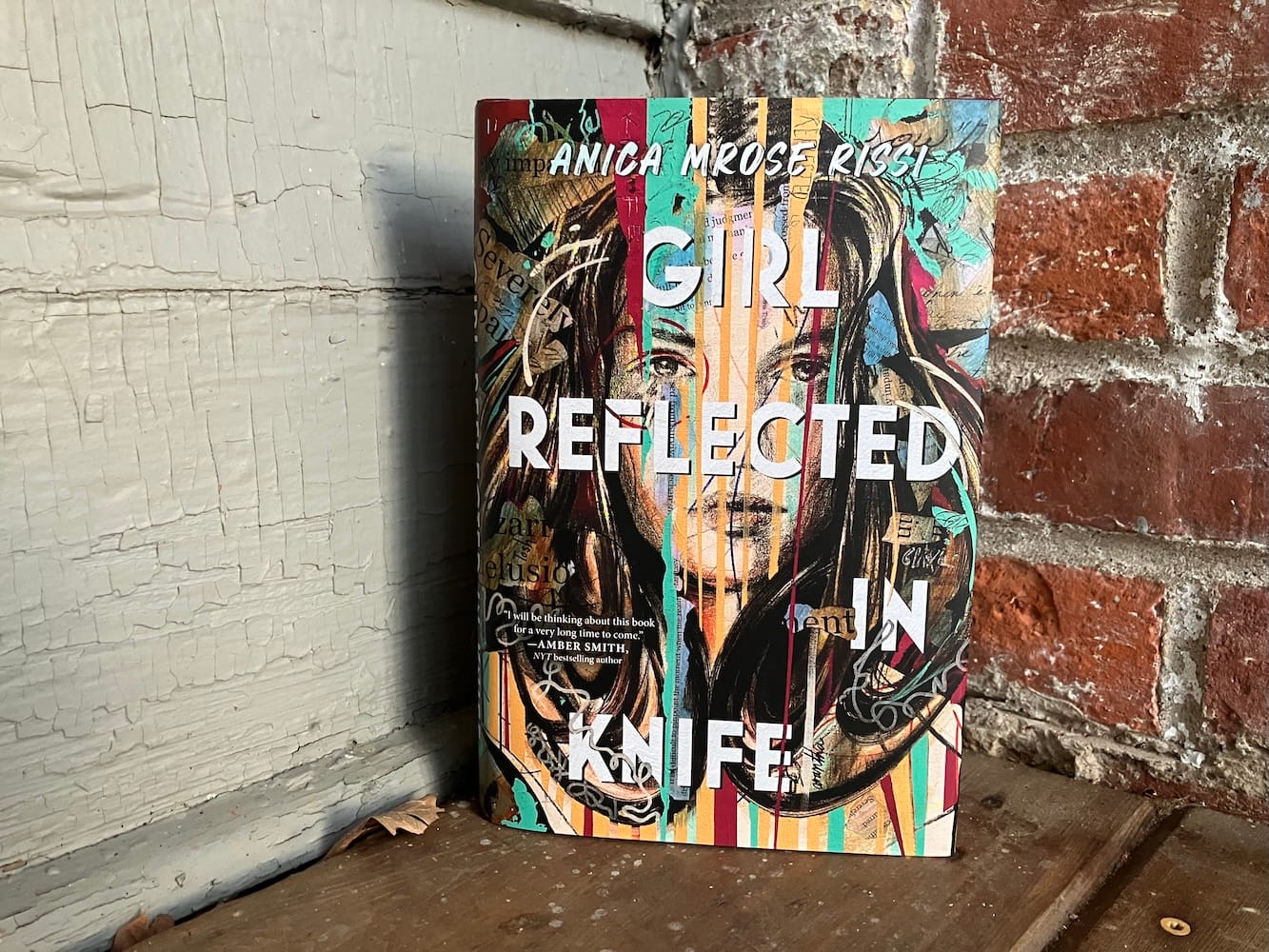
“Anica Mrose Rissi has crafted a haunting, bold portrait of a young woman whose world has reached fever pitch, whose grief has taken on a life of its own. Unputdownable and exquisitely written, Girl Reflected in Knife is chilling yet beautiful, fantastical yet all too real, as we follow one girl through the looking glass. I will be thinking about this book for a very long time to come.” —Amber Smith, New York Times bestselling author of The Way I Used to Be
“Anica Mrose Rissi has written one hell of a book about the way trauma shapes people and what it takes to rebuild yourself and your life on your own terms. Destiny’s story of abuse, addiction, neglect, and her sheer will to survive by creating a world where she can thrive is at once elegant and bruising, bone-sharp and filmy as gossamer. I loved every exquisite sentence.” —Kathleen Glasgow, New York Times bestselling author of Girl in Pieces
The winner of a signed hardcover of Girl Reflected in Knife will be randomly selected at the end of May, so subscribe now to be entered to win!